




 Next
NextCEOs report

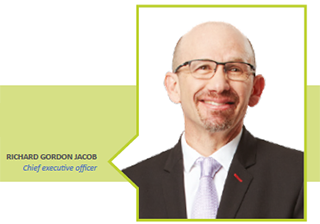
I am proud to report that continued focus on manufacturing excellence has produced record sales volumes in Hulamin Rolled Products. The strong manufacturing performance together with a weaker currency in the second half of the year (average of R14.18), produced HEPS of 78 cents per share of the second half of the year. An assessment of recoverable value resulted in an impairment charge of R1,45 billion to historical asset values.
In 1996, when the Hulamin Rolled products $550 million expansion was approved, the world was very different to the current global aluminium rolled products ecosystem. At that time, and prior to the unbudling of Hulamin from Tongaat Hulett, the feasibility study for this investment, approved by the Hulett Aluminium and Tongaat Hulett boards, was based on an annual sales volume of 150 000 tons. Since then, plant performance has improved considerably, despite a number of disruptions and equipment outages. I am therefore well pleased with the ongoing improvements that have resulted in sales in 2018 totaling 228 000 tons in Hulamin Rolled Products.
Performance review
Group sales volumes for the year to 31 December 2018 totalled a record 245 000 tons, which was measurably higher than the corresponding period’s 233 000 tons. Despite a third consecutive year’s record performance in Hulamin Rolled Products of 228 000 tons Hulamin Extrusions experienced a very difficult year. Following a major equipment breakdown early in the year, the business was unable to recover from the volume and confidence setback and reported a loss for the year. Hulamin Containers continued to perform well.
Since 2015, when Hulamin undertook to completely rebase our safety programme, our safety performance has improved considerably. In that year, Lost Time (LTIFR) and Total Recordable Injury Frequency Rates (TRCFR) were 0.32 and 0.89 per 200 000 hours worked, respectively. Concerted efforts to reduce risks associated with employees and on-site contractors getting injured have included focus on employee behavior, risk assessment, physical separation of employee and risk and suspended load safety. Research has shown that Hulamin is now one of the safest (if not the safest) aluminium semi-fabrication plant in the world. Our 2018 Injury rates were 0.08 (LTIFR) and 0.24 (TRCFR) respectively.
Underpinning the step up in safety performance are also significant changes to employee engagement and workplace orderliness. In 2018 we reran a 2016 Employee Engagement survey, which showed a 20% improvement in engagement level. Furthermore, we are convinced that our efforts at establishing higher levels of workplace orderliness have contributed to numerous other performance indicators that have improved such as yield, unit cost, energy efficiency etc.
In an unprecedented move on November 28 2017, US Secretary of Commerce Wilbur Ross announced the self-initiation of antidumping duty and countervailing duty investigations on imports of aluminum sheet and coil imports from the People’s Republic of China. These historic investigations, the first in over a quarter of a century, were self-initiated. Both of these actions have created a window of opportunity for Hulamin to increase its sales footprint and entrench its market position in the United States, where Hulamin has a long history and strong customer base.
Markets
Hulamin sells both rolled and extruded aluminium products to fabricators and manufacturers around the world. While Hulamin Rolled Product Exports around 65% of its sales, almost 100% of Hulamin Extrusions sales are local.
2018 was a difficult year for the South African economy and Hulamin in particular struggled to improve its local sales. The SA economy shrunk in the middle two quarters of 2018 (by 2.6% and 0.4% respectively). The Gross Domestic Capital Formation, a measure of capital investment in the economy, declined in every quarter of 2018 to the lowest level since mid-2016. In parallel, imports of price-subsidised rolled and extruded products (mainly from China) grew sharply by 10% and 15% respectively. Subsidised imports have the effect of suppressing domestic prices, rendering local manufacturing industries economically unsustainable. In Southern Africa, our markets are already too small to sustain many strategic industries. These industries support employment, skills development, technological advancement and many other pillars of a successful economy. As a result, we resubmitted applications for increases in the duty levels of rolled and extruded aluminium products during the course of 2018.
financial results
Turnover increased to R11,5 billion (2017: R10,3 billion) on increased volume. This was somewhat countered by a strengthening Rand/US Dollar that averaged 7 cents stronger for the year (R13.25 in 2018 versus R13.32 in 2017).
Unit conversion costs in Rolled Products decreased again in 2018 in real terms. After two years of successive real decreases in excess of 10% (2016: 10.7% reduction and 2017: 10.6%), Hulamin Rolled Products’ unit costs further decreased by 2.4% in 2018 (2.2% increase in nominal terms, despite significant commodity price impacts).
Earnings before interest and taxation (EBIT) declined by 291% to negative R950 million due to the recognition of impairment charges. Net interest charges decreased by 5% to R74 million. Attributable earnings were consequently 354% lower at negative R773 million for the year. Headline earnings per share (HEPS) of 91 cents compared to 95 cents in 2017.
The London Metal Exchange (LME) aluminium price ended 2018 at $1 870 per ton, close to the $1 916 per ton that it closed at in 2017. On a net basis (volume weighted by month) this resulted in an insignificant metal price lag benefit of R4 million for the full year (2017: R150 million).
Free cash flow amounted to R90 million (2017: R296 million) and free cash flow (adjusted) amounted to R298 million (2017: R296 million), after R242 million capital expenditure. Free cash flow (adjusted) is made up of cash flows before financing activities adjusted for the impact of the inclusion of a significant customer payment. For further information refer to Supplementary information: Free cash flows (adjusted) included in the financial capital section.
The performance of Hulamin Extrusions remained unacceptable in trading conditions that remained extremely challenging. The group has commenced a strategic review of its investment portfolio, including its interest in Hulamin Extrusions.
Refinement of the business model
In 2018, the management team presented an updated group growth strategy, reopened the feasibility study done previously for an automotive finishing investment and developed financial models for the simplification of the Hulamin Rolled Products operation. This work indicated significant and practical opportunities for growth, particularly in areas of Hulamin’s core competences such as beverage cans and electric vehicles. Hulamin plans to reduce product range with consequent cost reductions and rolling margin uplifts, and to expand into new profit pools. In particular, good progress was made in 2018 in opening up a new operation based on Hulamin’s existing technical service and logistics capability in the can stock market. This new operation will focus on sourcing can stock (to supplement that which will continue to be produced in Pietermaritzburg) and supply to existing and new customers.
Other new opportunities in feasibility phase include investigations into strategic investments in specifically synergistic downstream fabrication assets, as well as aluminium scrap collection and related manufacturing investments in Africa.
CONCLUSION
In years to come, I am optimistic that 2018 will prove to be pivotal. In addition to a record production year, the foundations for a step up in value creation for all stakeholders will be shown to have been laid.
Richard Gordon Jacob
Chief executive officer

