Previous
 Next
NextKey resources we rely on
Scroll using a scroll below the table to view the full table
| Our business model relies on a stock of capitals to function and operate | The allocation and utilisation of our capitals is done with a firm strategic intent in mind | Our capitals enable us to carry out the activities that add value to Aluminium | Due to our activities, our capitals fluctuate and transform | |||||
Input and utilisation |
Strategic Intent |
Adding value through our activities |
Transformation of capitals |
|||||
 |
financial capitalThe group requires funding for day-to-day activities incorporated in its business model which allows it to generate value for all stakeholders. Funding is received from: Investors: The group’s largest investor is the Industrial Development Corporation representing 29,6% of all investors. Investors require returns on investment in the form of a growing share price (through a sustainable profitable business) and dividends. Finance houses: The group has secured a three-year borrowing facility of R1,65 billion which includes a general 360-day facility of R350 million and a revolving working capital facility of R1,3 billion secured against receivables and inventory. Finance houses provide this capital in exchange for interest on the amount invested. |
|
Refer to our business model here. |
Equity: Equity provider’s book value R3,8 billion with a current market value of R1,4 billion. This indicator of impairment has been assessed on here of the report.
Retained earnings for the current year have decreased by R773 million. Dividends declared per share of 18 cents. |
Borrowings
Net debt: R294 million Net cash inflows from operating activities for the year ended 31 December 2018: R332 million |
|||
 |
manufactured capitalPrimary aluminiumThe group makes use of primary aluminium (as a raw material) as part of its remelt and casting operations which produce rolling slab and extrusion billet required for the manufacture of fabricated and semi-fabricated aluminium products. Through a liquid metal supply agreement the group has secured the supply of liquid metal from South 32’s Hillside Aluminium Smelter until December 2019. Bayside casting facility: The Bayside cast house owned by Isizinda is effectively controlled by Hulamin and produces one-third of Hulamin’s requirements of rolling slab for the rolling operations. Remelt and Casting: Hulamin owns three slab production lines, fed by reverberatory melting furnaces, with a slab capacity of around 240 000 tons per year and a recycling furnace. Rolling: The rolling operations consist of hot, cold and foil rolling mills. Finishing equipment includes coil coating lines, slitting, sheet cut-to-length lines, cleaning and tensioning levelling and foil finishing facilities. The plate plant is equipped with sawing, stretching and plate cut-to-length lines. Extrusions: Two extrusions plants which include the ability to manufacture dies used in the extrusions press to produce the desired profile. Finishing options include powder coating, anodising and fabrication. |
|
Our manufactured capital is subjected to wear-and-tear as finished goods are produced for sale to our customers to their quality specifications. The group takes asset management and maintenance programmes seriously and implements these programmes with consideration of production volumes lost.
Management implemented a trade-off between its manufactured capital and its financial capital. |
Key salient featuresProduction Rolled Products: 228 000 tons Extrusions: 17 000 tons Additions Rolled Products: R215 million Extrusions: R26 million Repairs and maintenance Rolled Products: R261 million Extrusions: R24 million Depreciation Rolled Products: R215 million Extrusions: R26 million |
||||
 |
human capitalThe Hulamin Group employs 2 039 people across its various business units. The state-of-the-art technical equipment employed in the group’s business model requires key engineering, metallurgical and manufacturing experience and key competencies and capabilities. |
|
Employee’s competencies and capabilities are used in operating manufactured capital to produce finished goods for sale to our customers. Where required employees are provided with various self-development opportunities through the talent management and development programme, financial assistance for academic studies and an employee wellness programme. During the current financial year the group has shared R1,2 billion in value with employees through guaranteed and variable remuneration structures. |
|||||
 |
natural capitalLocal aluminium smelters: The group relies on the Hillside smelter to produce primary aluminium. The Hillside smelter is highly energy and carbon intensive. Rolling and finishing: As part of the manufacturing operations the group relies on the use of water, gas and electricity. |
|
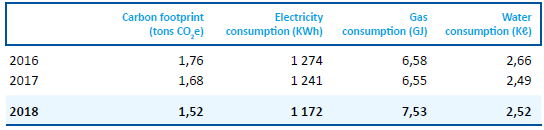
During the manufacturing process Hulamin’s impact on natural resources is as indicated below:
|
|||||
 |
social, relationship and intellectual capitalThe group leverages its relationships within the community in which it operates, with its supplier and its customers to create value for all stakeholders. Government: Government provides support for the aluminum industry through government’s stance on tariffs and duties and assistance with the downstream development of the aluminium value chain. Suppliers: Strong relationships with suppliers ensures that the group is able to secure the long-term supply of key inputs into the manufacturing process. Customers and markets: Relationships with customers are key in developing new products and innovation to suit customer needs and expectations. Our customer relationships also provide us with the leverage require to profitably sell our finished products. |
|
The group interacts with all stakeholders through a formalised stakeholder engagement process. The needs of stakeholders are identified and our strategic response is altered where required to respond to the material needs of our stakeholders. Through this the group continues to enhance the social and relationship capital it has established with stakeholders. |
|||||